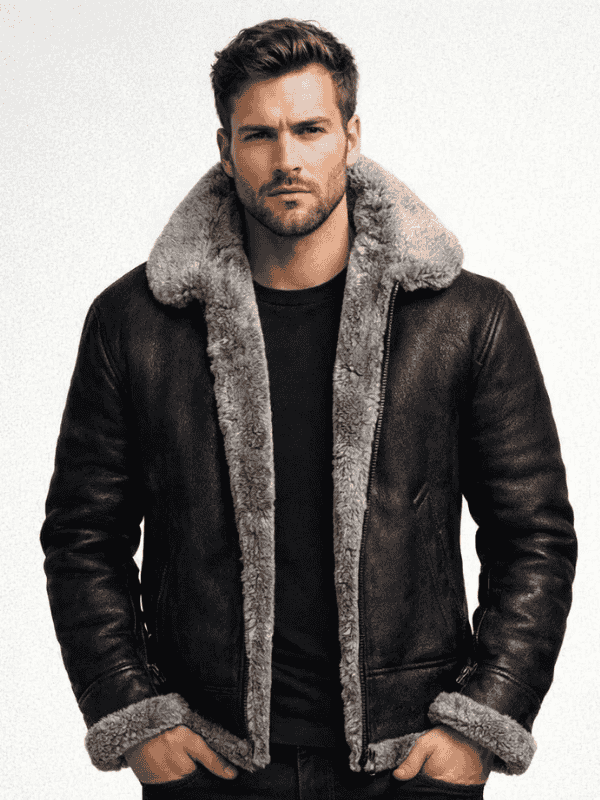
Shearling and sherpa look alike in photos: both are soft, woolly and usually cream-coloured, and both line some of the warmest jackets you can buy. They are very different materials. Shearling is a natural sheepskin; sherpa is a synthetic fabric made to resemble it. Knowing the difference helps you understand prices, warmth and care before you buy a winter jacket.
Shearling vs sherpa at a glance
| |
Shearling |
Sherpa |
| What it is |
Sheepskin or lambskin tanned with the wool still attached |
A knitted pile fabric, usually polyester, sometimes blended with cotton or acrylic |
| Structure |
One natural material: suede or leather on one side, wool on the other |
Fleece pile on a fabric backing, sewn in as a lining |
| Warmth |
Excellent; wool insulates even in very cold, dry weather |
Good for everyday cold |
| Breathability |
High; wool wicks moisture away |
Lower; can feel warm and damp when you are active |
| Weight |
Heavier |
Light |
| Lifespan |
Many years with care |
A few seasons before the pile mats down |
| Care |
Brush, spot clean, professional cleaning when needed |
Usually machine washable (check the label) |
| Price |
High |
Low to moderate |
| Animal product |
Yes |
No |
What is shearling?
Shearling is the skin of a sheep or lamb that has been tanned and finished with the wool left on. Because the wool and the hide are one piece, a shearling jacket needs no separate lining: the wool faces in for warmth and the suede or leather side faces out. You will also see it called sheepskin, and jackets made with it are sometimes described as “genuine shearling” or “real sheepskin”.
The most famous shearling garment is the B-3 bomber, made for American bomber crews in the Second World War, who flew at high altitude in unheated aircraft. The same qualities that kept aircrews warm still apply: dense wool traps air, wicks moisture and keeps insulating in severe cold.
What is sherpa?
Sherpa is a soft, curly pile fabric designed to imitate the look and feel of sheep’s wool. It is usually made from polyester, has a smooth knit backing on one side and a fluffy pile on the other, and takes its name from the Sherpa people of Nepal, whose traditional clothing uses wool linings. It is also sold as faux shearling or faux sheepskin, although “faux shearling” often refers to a slightly denser, more realistic version bonded to a faux-suede outer.
Sherpa is light, inexpensive and easy to wash, which is why it lines so many denim jackets, hoodies and trucker jackets.
Which is warmer?
Real shearling is warmer, and the gap grows as the temperature falls. Wool fibres hold a lot of still air and can absorb moisture without feeling wet, so you stay warm without overheating. Sherpa insulates well for its weight and is perfectly comfortable for a typical city winter, but it breathes less and compresses over time, which reduces its warmth.
The outer shell counts too. A leather or sheepskin shell blocks wind; a denim or cotton shell lets more of it through.
Durability and care
A shearling jacket is an investment piece. Looked after, it lasts for many winters. Shake it out and brush the wool occasionally, let it dry naturally if it gets damp, keep it away from radiators and store it on a wide hanger in a breathable garment bag. Deep cleaning is a job for a leather and suede specialist. Our leather jacket care guide covers the basics that apply to the leather side.
Sherpa is low-maintenance. Most sherpa-lined jackets can be washed on a cool, gentle cycle and air dried; high heat can melt or mat the fibres. After a few seasons the pile tends to flatten and pill, especially at the collar and cuffs.
How to tell them apart
- Part the fibres. On shearling you will see skin at the base of the wool. On sherpa you will see a knitted fabric backing.
- Look at the seams. Shearling is one layer, so the wool and the outer surface are the same piece. Sherpa is a separate lining stitched to the shell.
- Feel the weight. Shearling is noticeably heavier.
- Check the label. Real shearling is labelled as sheepskin, lambskin or shearling; sherpa is labelled polyester, acrylic or faux.
Which should you choose?
Choose shearling if you face properly cold winters, want a jacket to keep for years, and like the look of a classic aviator or B-3 bomber.
Choose sherpa or faux shearling if you want the look at a lower price, prefer to avoid animal products, need something lighter for milder winters, or want easy washing.
We make both. See our shearling coats and jackets and aviator jackets, including B-3 styles such as the men’s black B-3 flying bomber and the women’s distressed brown B-3 bomber. Check the materials listed on each product page to see whether the lining is real sheepskin or faux shearling, and ask us if you are unsure. All jackets are made to order in XS to 5XL, with custom sizing available. If you are deciding between cuts, read bomber vs biker: which jacket suits your style.
Frequently asked questions
Is sherpa real wool?
Usually not. Most sherpa is polyester, sometimes blended with cotton or acrylic. A small number of “wool sherpa” fabrics exist, and the label will say so.
Is shearling the same as sheepskin?
In clothing the two words are used for the same thing: a sheep or lamb skin with the wool left on. Strictly, shearling comes from an animal that has been shorn once, which gives a short, even wool.
Is faux shearling the same as sherpa?
They are close relatives. Both are synthetic pile fabrics. Sherpa is usually a loose, curly fleece used as a lining; faux shearling is typically denser and bonded to a faux-suede face to copy the look of a whole sheepskin.
Can you wear shearling in the rain?
Light rain or snow will not harm it. If it gets wet, shake off the water and let it dry slowly at room temperature. Avoid heavy downpours and never dry it with direct heat.
Why is shearling so expensive?
Each jacket uses several whole skins that must be matched for colour and wool length, and the material is slow to tan and difficult to sew. You are paying for the material and the handwork.